Arizona Natural Health Products

Raw Materials

Garlic and Allicin

From Arizona Natural Products, Over 20 years of quality

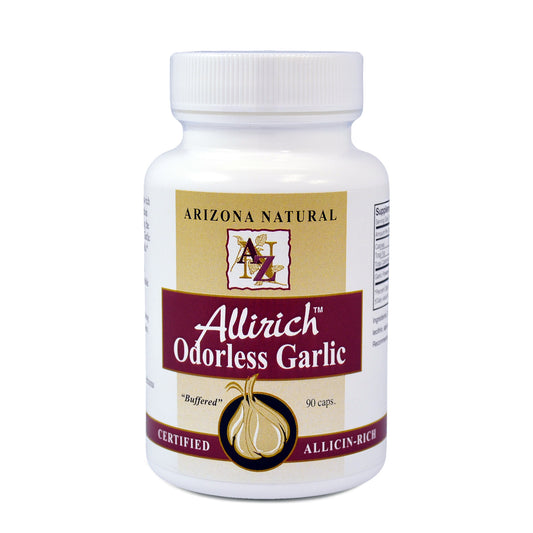
Allicin is a compound obtained from garlic, and is the main biologically active component. It is the key ingredient responsible for garlic's anti-bacterial properties. Several recent published studies indicate that alllicin may: reduce atherosclerosis and fat deposition, normalize the lipoprotein balance and decrease blood pressure. It also has anti-thrombotic and anti-inflammatory properties, and functions as an antioxidant.

Continue reading to learn everything you would ever want to know about Garlic and Allicin.

What is Allicin?

Allicin is a compound obtained from garlic, and is the main biologically active component. It is the key ingredient responsible for garlic's anti-bacterial properties. Several recent published studies indicate that alllicin may: reduce atherosclerosis and fat deposition, normalize the lipoprotein balance and decrease blood pressure. It also has anti-thrombotic and anti-inflammatory properties, and functions as an antioxidant.

More Information

Name of Drug: Allii sativi bulbus, garlic clove.
Composition of Drug: Garlic bulbs, consisting of fresh or carefully dried bulbs that consist of the main bulb with several secondary bulbs (cloves) of Allium sativum L. [Fam. Alliaceae], as well as its preparations in effective dosage. Garlic contains alliin and its degradation products, and sulfur-containing essential oils.
Uses: Supportive to dietary measures at elevated levels of lipids in blood. Preventive measures for age-dependent vascular changes.
Contraindications: None known.
Side Effects: In rare instances there may be gastrointestinal symptoms, changes to the flora of the intestine, or allergic reactions. Note: The odor of garlic may pervade the breath and skin.
Interactions with Other Drugs: None known.
Dosage: Unless otherwise prescribed: average daily dosage 4 g fresh garlic [one medium clove]; equivalent preparations.
Mode of Administration: The minced bulb and preparations thereof for internal use.
Actions: Antibacterial, anti-mycotic, lipid-lowering, inhibition of platelet aggregation, prolongation of bleeding and clotting time, enhancement of fibrinolytic activity.
Reprinted with permission from The Complete German Commission E Monograph Therapeutic Guide to Herbal Medicines, a 700-page guide featuring 380 monographs. The guide was published by the American Botanical Council, Austin, Texas, 1998

Use the Whole Garlic Plant for Better Health

Every one of us have heard stories about the health benefits of garlic or experienced these benefits first hand. For thousands of years this spice has bolstered the flavor of food and the health of those who ate it. Garlic fed the workers who built the great Pyramid of Gaza, protected the monks who brought aid to the plague victims of the Middle Ages and healed the wounds of warriors in the First World War. It is known to reduce blood cholesterol, fight infection and enforce the immune system, and can today be taken in supplement form by those seeking good health without halitosis.

Although there are over 600 species of the Allium genus spread over 4 continents, only a few are cultivated for use as health supplements. Of those few that are cultivated, only the bulb is used in the manufacture of health products and powdered spices. While the bulb of the Allium sativum variety is rich in nutrients, sulfur compounds and allicin, garlic’s antibacterial component, it is still but half the plant. The other half, the leaves, are allowed to dry and brown while the garlic bulb develops under the ground, maturing to peak potency. But these leaves are equally rich in a set of nutrients all their own. When harvested while still green, before all the nutritional value is transferred to the bulb, the resulting green food is rich in sulfur, adenosine, ajoenes and minerals. In fact, certain strains of the garlic leaves are richer than cultivated garlic bulb in total sulfur content.

So, why are the leaves discarded? Why don’t we see them in garlic supplements or green food products? Because the commercial crop for garlic is for the bulb, and in order to grow robust garlic bulbs, the plant must mature to the point that the leaves dry up. That bulb is then processed into garlic supplements that are generally rich in allicin, but lacking in adenosine and other natural garlic compounds. Since there is no economic motivation to grow garlic just for the leaves, we forgo half of garlic’s benefits.

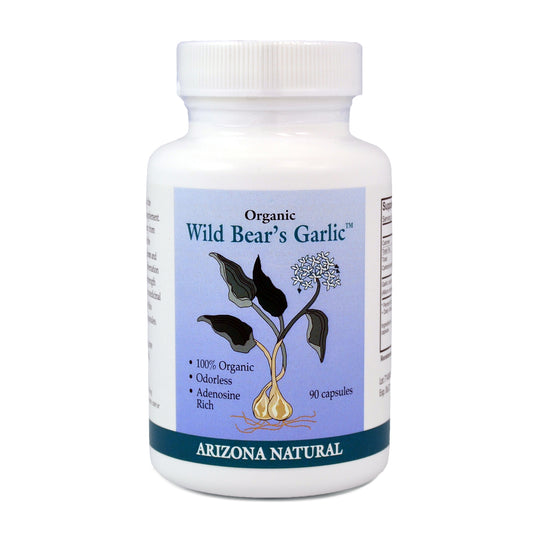
In the late 1980s, German researchers rediscovered a wild strain of garlic, Allium ursinum, which was harvested from the European forests and alpine valleys. This particular strain, commonly called Wild Bear’s Garlic, produces nutrient-rich leaves which are harvested for their medicinal value. The health benefits of these wild garlic leaves were so many that the plant was later named the European Plant of the Year. This wild strain of garlic at last offered a renewable source of garlic leaves as a complement to existing garlic supplements. By combining these Wild Bear’s Garlic leaves with cultivated garlic bulb, one could get all garlic had to offer in one supplement.

Let’s examine these two allium cousins and compare nutrient content and medicinal action. Alone, they each have great health benefit; together they make up one of the most potent herbal tonics available to man.

CULTIVATED GARLIC – ALLIUM SATIVUM

Though Allium sativum is known to originate on the great Asian plain, it is today cultivated in virtually every country and culture. It has integrated itself into our daily diet and become the stuff of which folklore and legends are made. The garlic bulb has enjoyed such a long and famous existence and become a common herbal medicine for one reason only; it works. Louis Pasteur discovered its antibacterial properties in the late 1800s and researchers have found that it is effective against more strains of bacteria than penicillin. It has also shown strong antifungal activity and is commonly used as a treatment for Candida albicans, the common cause of mouth thrush and vaginitis. Most of the fifty or more fungi that can cause human disease are in yeast form, and Allium sativum has shown activity against many of these.

But cultivated garlic bulbs action is not limited to its antimicrobial activity alone. Garlic has been shown to effectively reduce or control blood cholesterol levels and to promote the correct ratio of HDLs (good cholesterol) to LDLs (bad cholesterol). Because of its unique action on fats, triglycerides can be reduced and blood platelet stickiness is diminished so that blood flows more freely. This improves circulation, reduces hypertension and reduces the chances of blood clots. One compound in garlic, ajoene, has been shown to have an antithrombotic activity similar to that of aspirin without the stomach upset. While its effects on bacteria, fungi and fats lead the way in garlic’s march through medical history, they are but a few of its overall attributes. Research has demonstrated garlic’s activity against protozoa, like those which cause dysentery, and against viruses, such as those causing herpes simplex 1 and influenza B. Garlic has been used to effectively treat intestinal parasites, enforce the immune system, combat free radicals and help prevent cancer. There is ample research showing how garlic can lower elevated blood sugar levels, protect the liver, treat poisoning from heavy metals like lead and manage respiratory diseases. No wonder this panacea, which Hypocrites himself used for several cures, has withstood the test of five thousand years!

The scientists are still discovering active compounds in garlic, but of those known today, the sulfur-containing compound allicin appears to be the most active. Allicin and other thiosulfinates are the odorous but medicinal constituents of garlic bulb and make up almost two dozen sulfides, ajoenes and vinyldithiins. Other active components of garlic include amino acids, S-alkyl-cysteine sulfoxide, y-glutamylcysteines and small amounts of adenosine and selenium. This variety of active compounds makes garlic effective on many metabolic pathways and makes it nature’s most effective preventative medicine. Garlic products that are allicin rich are usually also rich in total sulfur, but not all garlic products offer even these essential compounds. Garlic oils and aged garlic extracts contain low allicin levels, while dehydrated and freeze-dried powders contain the highest levels, which generally mean higher medicinal activity.

WILD GARLIC - ALLIUM URSINUM

Wild garlic, or Wild Bears Garlic as it is sometimes known, is one of the oldest medicinal herbs known in Europe, and has a history of use dating back to the Ancient Greek and Roman civilizations. Folklore tells us that it was first discovered when bears were observed devouring huge amounts of the plant to restore their strength after a long hibernation. Once discovered, this green food found its way into herbal medicine for disorders of the stomach and intestines and as a blood purifier. Scientist began looking closely at its botanical properties late in the 1980s, and it regained notoriety as the “Plant of the Year” of the Association for the Protection and Research on European Medicinal Plants.

As garlic goes, Allium urinum is unique in several ways. It is a different Allium species than the type commonly grown commercially for bulbs, and only the leaves are harvested. Like a tulip, the bulb remains in the ground to sprout again year after year. Wild garlic is also nearly odorless when compared to ordinary garlic, probably due to the large amounts of chlorophyll found in the leaves. The wild garlic leaf is a nutritional powerhouse containing nearly twice the magnesium and phosphorous and 15 times the manganese of its cultivated cousin, which also falls short on magnesium, iron and zinc. While the total sulfur content of the two species is similar, wild garlic is rich in ajoenes, y-glutamyl peptides and has a considerably higher content of adenosine. Y-glutamyl peptides are believed to be related to wild garlic’s ACE-inhibitory potential, an effect on a key enzyme involved in blood pressure regulation. Ajoene, present at twice the level found in ordinary garlic, promotes vasodilation by effecting calcium and potassium channels. Adenosine, which is a staggering 15 to 20 times higher in wild garlic, also influences blood pressure. It is believed to also protect against toxins, reduce blood lipid levels and inhibit platelet aggregation.

Commercially, few products made from Allium ursinum are available because the crop is wild crafted and seasonal, sprouting once yearly in the spring. Wild Bear’s Garlic capsules are available as a nutritional supplement, but no source for the herb as a nutritious seasoning is known. Being such a good blood tonic, relatively odorless and easy on the gastrointestinal tract, one would think it a good replacement for Allium sativum supplements. And since wild garlic has a unique set of nutrients all its own, it makes the perfect complement to the garlic products on the market today.

  • Inhibition of whole blood platelet-aggregation by compounds in garlic clove extracts and commercial garlic products (Abstract).
  • Ingredient
    Culitaved Garlic
    Wild Garlic
    Total Sulfur
    6,100 mg/kg.
    7,800 mg/kg.
    Allicin
    6,000 mcg/gm.
    1,500 mcg./gm.
    Alliin
    15,000 mcg/gm.
    4,500 mcg/gm.
    MATS
    1,800 mcg/gm.
    3,000 mcg/gm
    Adenosine
    70 mg./kg.
    1,300mg./kg.
    Manganese
    14 mg./kg.
    240 mg./kg.
    Phosphorous
    6,800 mg./kg.
    11,000 mg./kg
    Iron
    100 mg./kg.
    125 mg./kg.
    Ajoenes
    Yes
    Yes
    Vinyldithiins
    Yes
    Yes
    Y-glutamyl peptides
    <
    Yes
    Y-glutamyl cysteine
    Yes
    <

    When the entire garlic plant is taken into consideration, it is easy to see the full wealth of nutritional components found in the bulb and leaves. The sulfur compounds in garlic, to which most of the therapeutic benefit is attributed, vary greatly and are in a constant state of change during the growing cycle of the plant. Since no single garlic plant can be harvested when both the leaves and the bulb are at their nutritional peak, the best of both species must be used to insure a complete garlic product.

    Allicin as an Antifungal and Antibiotic

    In an undamaged condition garlic bulbs exhibit little or no odor, but as soon as they are cut or crushed it releases a chemical defense resulting in a strong odor. This biological defence is the chemical Allicin, the active principal of garlic, which is created when the enzyme Allinase mixes with the amino acid Alliin and generates the active principal, Allicin. Allicin has been shown to be a broad spectrum antibacterial activity inhibiting the growth of both Gram positive and Gram negative micro-organisms. This is a broader activity than penicillin.

    Garlic has been used for many years, so there is a considerable track record to indicate that it is safe to use. Documented research into Allicin indicates that the compound is a broad based natural antibiotic and fungicide and displays efficacy against a broad range of organisms.

    Pathogen
    Minimum Inhibitory Concentration in ppm
    Acinetobacter baumanii
    15
    Aspergillus niger
     
    Bacillus ssp
     
    Bifidobacterium sp.
    8
    Campylobacter jejuni sub jejuni
     
    Campylobacter fetus
     
    Campylobacter coli
     
    Campylobacter upsaliensis
     
    Campylobacter jejuni sub doyley
     
    Campylobacter hyointestinalis
     
    Campylobacter ureolyticus
     
    Campylobacter mucosalis
     
    Campylobacter helveticus
     
    Candida albicans
    4
    Candida dublinensis
    8
    Candida galbrata
    8
    Candida guillermondii
    4
    Candida krusei
    4
    Candida lusitaniae
    4
    Candida neoformans
    1
    Candida parapsilopsis
    4
    Candida tropicalis
    4
    Clostridium perfringens
    64
    Clostridium ssp
     
    Crithidia fasciculate
    30
    Cryptococcus neoformans
     
    Eberthella typhosa
     
    Entamoeba histolytica
    30
    Enterococcus faecium
     
    Epidermphyton
     
    Escherichia coli 0156:H25
    16
    Escherichia coli 0157
    32
    Escherichia coli ATCC 25922
    4
    Giardia lamblia
    30
    Helicobacter pylori
     
    Herpes simplex virus type 1
     
    Herpes simplex virus type 2
     
    Human cytomegalovirus
     
    Human rhinovirus type 2
     
    Influenza B virus
     
    Klebsiella sp.
     
    Klebsiella pneumoniae ATCC 13883
    4
    Lactobacillus sp.
    64
    Leishmania major
    30
    Leptomonas colosoma
    30
    Listeria monocytogenes
    16
    Microsporum
     
    Molluscum contagiosum
     
    Mycobacterium tuberculosis
     
    Paracoccidiodes brasiliensis
     
    Parainfluenza virus type 3
     
    Proteus mirabilis
     
    Proteus vulgaris ATCC 13315
    4
    Pseudomonas aeruginosa ATCC 27853
    16
    Pseudomonas aeruginosa NCTC 10662
    16
    Salmonella typhimurium
    32
    Salmonella typhimurium ATCC 14028
    4
    Serratia marcescens ARCC 8100
    8
    Shigella dysenteriae
     
    Shigella flexneri ATCC 12022
    4
    Shigella sonnei
     
    Staphylococcus aureus
    16
    Staphylococcus aureus MRSA
    4
    Staphylococcus aureus ATCC 25923
    2
    Staphylococcus epidermis
    16
    Staphylococcus epidermis ATCC 12228
    4
    Streptococcus hemolyticus faecalis ATCC 19433
     
    Streptococcus faecalis ATCC 19433
    4
    Streptococcus pneumoniae ATCC 6303
    4
    Streptococcus pyogenes sp.
    16
    Streptococcus pyogenes ATCC 19615
    4
    Torulopsis glabrata
    2
    Trichophyton
     
    Trypanosoma cruzi
     
    Vaccinia virus
     
    Vesicular stomatitis virus
     

    Chemists Shed Light on Health Benefits of Garlic

    ScienceDaily (Jan. 31, 2009) A Queen's-led team has discovered the reason why garlic is so good for us.

    Researchers have widely believed that the organic compound, allicin which gives garlic its aroma and flavor acts as the world's most powerful antioxidant. But until now it hasn't been clear how allicin works, or how it stacks up compared to more common antioxidants such as Vitamin E and coenzyme Q10, which stop the damaging effects of radicals.

    "We didn't understand how garlic could contain such an efficient antioxidant, since it didn't have a substantial amount of the types of compounds usually responsible for high antioxidant activity in plants, such as the flavanoids found in green tea or grapes," says Chemistry professor Derek Pratt, who led the study. "If allicin was indeed responsible for this activity in garlic, we wanted to find out how it worked.

    "The research team questioned the ability of allicin to trap damaging radicals so effectively, and considered the possibility that a decomposition product of allicin may instead be responsible. Through experiments with synthetically-produced allicin, they found that an acid produced when the compound decomposes rapidly reacts with radicals.

    Their findings are published in the January 2009 issue of the international chemistry journal Angewandte Chemie. "Basically the allicin compound has to decompose in order to generate a potent antioxidant," explains Dr. Pratt, who is Canada Research Chair in Free Radical Chemistry. "The reaction between the sulfenic acid and radicals is as fast as it can get, limited only by the time it takes for the two molecules to come into contact. No one has ever seen compounds, natural or synthetic, react this quickly as antioxidants."

    The researcher is confident that a link exists between the reactivity of the sulfenic acid and the medicinal benefits of garlic. "While garlic has been used as a herbal medicine for centuries and there are many garlic supplements on the market, until now there has been no convincing explanation as to why garlic is beneficial," says Dr. Pratt. "I think we have taken the first step in uncovering a fundamental chemical mechanism which may explain garlic's medicinal benefits."

    Along with onions, leeks and shallots, garlic is a species in the family Alliaceae. All of these other plants contain a compound that is very similar to allicin, but they do not have the same medicinal properties. Dr. Pratt and his colleagues believe that this is due to a slower rate of decomposition of the allicin analogs in the onions, leaks and shallots, which leads to a lower level of sulfenic acid available to react as antioxidants with radicals.

    The study was funded by the Natural Sciences and Engineering Research Council of Canada (NSERC) and the Ontario Ministry of Innovation. Other members of the research team are Queen's Chemistry post-doctoral researcher Vipraja Vaidya and Keith Ingold, from the National Research Council of Canada.

    Immunomodulating Effect of Garlic Component, Allicin, on Murine Peritoneal Macrophages

    N.S. Kang, M.S.a, E.Y. Moon, Ph.D.a, C.G. Cho, M.D.b, S. Pyo, Ph.D.a--July 27, 2000.

    Abstract

    Macrophages play an important role in host defenses against tumors by killing them and produce secretory products, which were resulted in the protection against bacterial, virus infection and malignant cell growth. Allicin, the major component of Garlic (Allium sativum) was examined for the ability to induce secretory and cellular responses in murine peritoneal macrophages. When macrophages were treated with various doses (1, 10, 100 ng/ml) of allicin for 20 hr, allicin induced tumoricidal activity and increased the production of tumor necrosis factor (TNF-α), and nitric oxide (NO) in a dose-dependent manner. However, there was a little alteration on phagocytosis and the production of hydrogen peroxide (H2O2), interleukin-1 (IL-1), and IL-6. These results indicate that NO and TNF-α are likely major mediators of tumoricidal activity in allicin-treated macrophages. Taken together our data suggest that allicin is an efficient immunomodulator of macrophage secretory and cellular activities, showing a differential effect on production of cytokines and cytotoxic molecules. See the full article here.

    Excerpts from Nutrition Science News Article

    Can a clove a day keep the doctor away? Can garlic supplements do the same job? The November 1998 conference in Newport Beach, Calif., on garlic and garlic supplements, sponsored by the Bethesda, Md.-based National Cancer Institute and Pennsylvania State University in University Park, showed that garlic supplements may prevent heart disease and cancer, help memory and extend life.

    Garlic does not have to be eaten raw or fresh to be effective. The characteristic odor of garlic is also not needed for health benefits. For example, aged, deodorized garlic, taken as a supplement, may work even better than fresh garlic in protecting against cell damage that leads to disease and aging.

    Garlic contains many substances that studies show act together to prevent disease and age-related conditions. Sulfur-containing compounds are responsible for most of the health benefits of garlic and its preparations. Nonsulfer compounds in garlic include protiens, carbohydrates, saponins, flavenoids (notably allicin), and selenium.

    View entire article here.

    More Info and External Links

    Cornell study on health benefits of garlic

    Garlic Information from the U.S. Department of Health & Human Services

    Garlic, the Ultimate Antibiotic


    Buy Products Here! Naturalcupboard.com
    Products About Us Contact Us Feedback Product Information
    Featured Products
    All Gar
    ALL GAR is the most complete garlic supplement you can buy. Each tablet contains 5,000 mcg. allicin from cultivated garlic bulb, and 200 mg.
    more information
    Oxiguard
    The complete anti-oxidant formula designed to protect cells and DNA from the effects of free radicals.
    more information
    products    :    company history    :    contact us    :    feedback    :    top sellers
    Copyright © 1999 - 2012. All Rights Reserved